Showroom Model Jobs: What They Are and How They Work
Episode 7.3 · Fashion Shows | Showroom | Trade Fairs · 2023-07-21 · 13:17 · Chapter 7 · by Stephan M. Czaja
Quick answer
A showroom model presents a designer's new collection live to a very small group: the designer, the team and a few buyers. There is no runway and no public audience. Buyers see stitching, fit and fabric quality up close. Showrooms are often a good entry point for new faces.
What you’ll learn
- Showrooms present collections to a few buyers, with no runway and no public audience.
- Showrooms often book new faces with perfect measurements, because experience and image matter less there.
- Showroom fees are lower because no photo or video material is created.
- Only accept trade fair jobs in the premium class from large, reputable companies.
- Hostess-style tasks like handing out flyers or snacks are not model jobs.
Read the full episode transcript
Showroom and fashion shows.
Fashion fairs and shows take place in all major cities. In principle, every fashion fair is like a large shopping center. Producers and retailers display their goods at booths while buyers and media representatives browse through the new collections and get to see some pieces. On the outskirts of the trade fairs, the major designers invite people to their shows, namely fashion shows and fashion weeks. Here, fifteen to twenty models present the new collections directly in front of an audience and photographers from magazines while they meet celebrities, bloggers, fashion magazine editors, and industry professionals around the shows.
The smallest form of presentation takes place in showrooms. You will often see showrooms, especially in your early days as a high fashion model. They exist in almost every city. Not every successful designer or brand automatically moves to the big city. You can find a few outside the major cities as well, but most of them are right in the midst of the action.
Showroom.
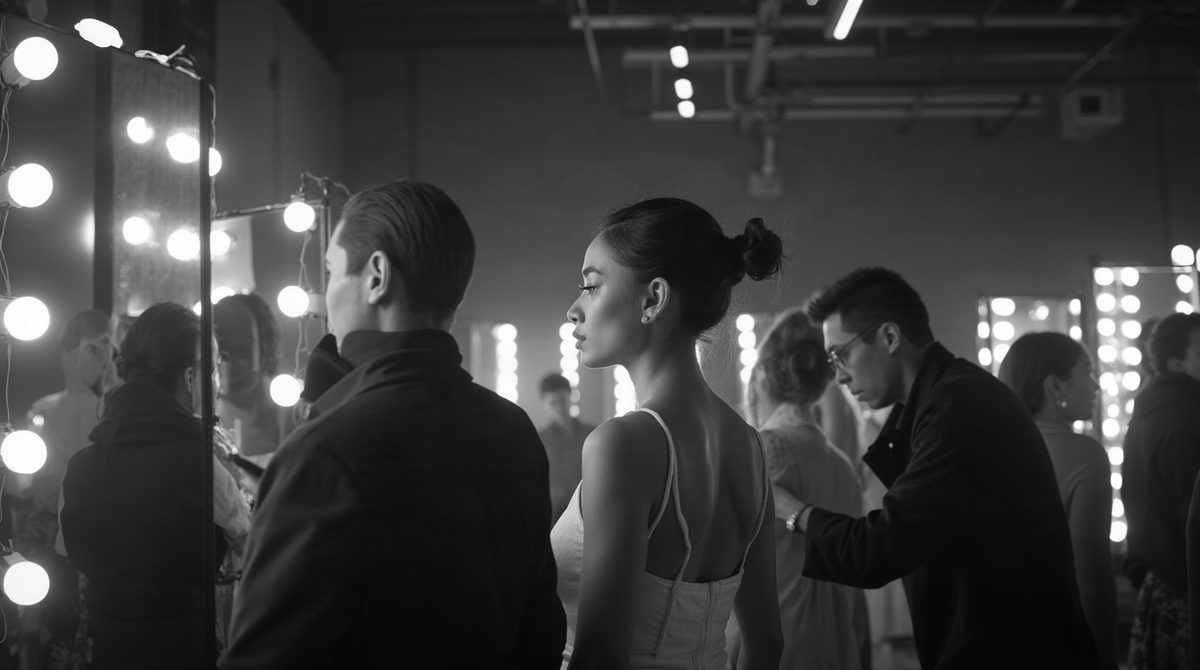
Showrooms are often a fantastic entry point for models. A showroom serves to present new fashion collections by the designer to a very small number of people. A showroom is not a big stage. Everything is relatively unspectacular. There is no runway, no public audience, only the designer, the team, a few buyers, and you.
Retail representatives and buyers are crucial individuals for the designers and their companies. The collections are then presented, and selected pieces are showcased to retailers, representatives, and buyers from around the world with your assistance. If a buyer decides on a particular model after a conversation with the designer or their salesperson, you present it live. This allows buyers to have a precise look at the stitching, the overall fit, as well as the quality of the fabric.
Showrooms often book new faces with perfect measurements because experience and image are not of great importance in showrooms. What matters, as with trade fairs, is a friendly person with top measurements.
Showrooms can be found not only at trade fairs. Throughout the year, designers present their collections in showrooms. They are often located in the back area of a boutique, the designer's premises, or the wholesale showroom, sometimes even at trade fairs. The fees in showrooms are lower because models and showroom jobs only serve as presentation objects, and no photo or video material is created.
What is more important in these jobs is that you get to know the designers, like Guido Maria Kretschmer, themselves or their closest and most trusted individuals. Often, even at the beginning of your career, you can already work directly for international brands that may also book you for subsequent jobs when you are a bit older. For example, showrooms in other cities, look books, or even entire campaign shoots.
The order fairs are quite similar. Once you have mastered your first showrooms, you will likely receive direct bookings for order fairs. The fees are slightly higher, and you usually work for several consecutive days, including hotel and travel expenses.
Shows and order fairs.
Collections for the new season.
We are all familiar with shows and order fairs. There are small representatives like the C P D Dusseldorf, larger ones like the Berlin Fashion Week, or the central trendsetters in Paris, New York, and London. Every Fashion Week takes place parallel to the order fairs, or the fairs take place parallel to the fashion weeks.
During the order days, there are not only trade fairs for buyers. Important designers present their new collections for each season to invited guests and media representatives on the grand runways with celebrities, music, and the flash of photographers. Around the order days, there are also exclusive events organized by companies and designers, including after-show parties for selected individuals. It's not just as a trader or agent that you can make many good contacts in just a few days. You get to meet many new people during and outside of the shows.
As a model, you can either work at trade fairs or try your luck at castings for the major runway shows. We'll delve into the world of Fashion Week shows and castings with great detail. I even dedicate an entire chapter to Fashion Week. We'll look at the big four, the Berlin Fashion Week, and I'll give you a detailed insight into preparation, castings, and shows.
Requirements for fashion shows.
You can only work at shows if you are young and have perfect measurements. Almost all designers have one thing in common: They tailor their collections for tall and slim individuals. The clothing falls more elegantly. Fabrics have their full effect. Everything appears more exclusive and high quality. Graceful figures make clothing and their potential price more expensive. Although not all fashion brands work according to this pattern, it is still the majority of the industry.
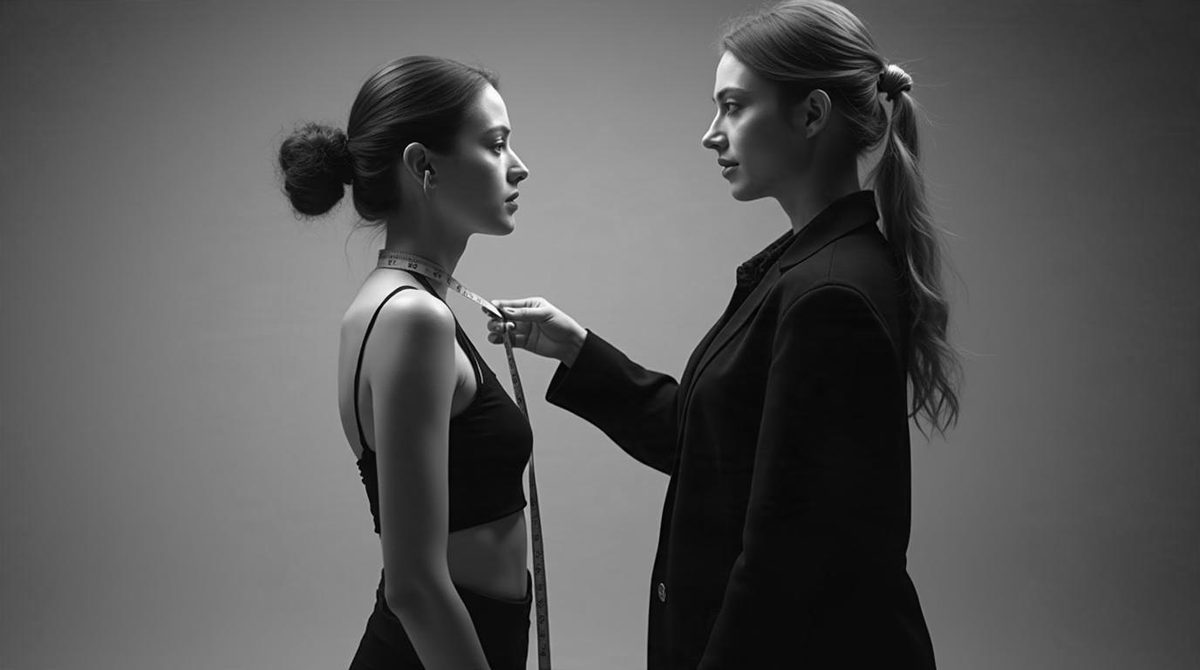
Fashion shows and presentations adhere to an unwritten norm. For female models, a clothing size of thirty-four, max thirty-four, thirty-six, with a height of one hundred seventy-seven, one hundred eighty centimeters is considered ideal at the beginning of the career. Your hip measurement should be below ninety-one centimeter. For male models, a clothing size of forty-eight, max fifty, fifty-two, is generally required with a height of one hundred eighty-five, one hundred ninety-two centimeter. However, for the Fashion Week, as a male, you should ideally be over one hundred eighty-seven centimeter.
After a few months or the first one or two years, you will have seen everything. Test shootings, showrooms, shootings for online shops, and initial more demanding projects. Now, slowly but surely, the first real campaigns and commercials will come your way.
PS, here's an additional tip for male models. At the beginning of your career, you should also pay attention to a younger look as a male model. Therefore, in the first few years, you should always go to castings with a clean-shaven face.
Trade fairs.
What exactly are trade fairs? Essentially, trade fairs are marketing events for manufacturers of products or service providers. Many people come together here for networking, new products, and information. By the way, the Fashion Week is actually also a trade fair. The shows are just the cherry on top. Most of the business takes place in the trade fair halls, where designers and brands showcase their new outfits. Here, you work as a showroom model. In almost every country, there are well-known trade fair cities for technology, automobiles, food, and fashion. Fashion is only a small part. However, trade fairs can be a dangerous territory for models.
Why are models in high demand at trade fairs? The answer is quite simple. Beautiful and interesting people who reflect the company's philosophy and the message of their products/services attract more potential customers. In other words, a good model supports the reputation, image, and ultimately the sales of the company. Both experienced professional models and new faces are booked as models for trade fairs.
When it comes to trade fairs, you should generally make sure to only accept jobs from large reputable companies. The show, presentation, or trade fair should be exclusive, targeting a professional audience such as buyers or media representatives, just like the collection presentation of an exclusive brand at trade fairs and order fairs in front of a selected audience or retailers.
Professional trade fair jobs.
Jobs at trade fairs need to be approached with caution for models. Many trade fair jobs have a hostess-like character. That means your tasks involve less high-quality presentation. Many photos are taken of you, you have long working hours, and tasks that you shouldn't do as a model. Standing in a bikini next to a motorcycle or directly on the racetrack, body paintings at gaming conventions, or distributing snacks and brochures. These are not tasks for models.
Because this point is very important, models should only accept jobs as trade fair models in the premium class. This means jobs where the payment is appropriate and the models work in a high-quality environment, modeling for respected brands in the premium class and in a professional setting. If you're wondering how high the payment should be, you can expect at least a mid to high three-figure daily fee, plus travel and accommodation, of course.
Many model jobs are offered at trade fairs. On Instagram, TikTok, you often see job offers for party promotion, grid girls, and other less positive jobs for models. Those are not jobs for models. As a model with an agency, your management selects the best jobs for you. New faces without an agency who are not yet familiar with the modeling industry should carefully examine the advertisements for their credibility and profitability. Does the job have a positive impact on your career? Do the tasks align with those of a model? Is the job well-paid enough? It's not about your career. Often behind seemingly harmless model inquiries, there are some black sheep. As always, forward all inquiries from Instagram, etc. directly to your modeling agency.
Are there good trade fair jobs? We had a practical example recently for a customer from Israel, one of the largest manufacturers of paper production machines. Sounds boring at first, but in the end, three models received high-quality designer dresses, all handmade from paper. Every hour, they were briefly present at the booth to visually support the presentation. This attracts more visitors than a simple presenter who conducts the presentation and shows potential customers, publishers, printers directly what precision is possible even with huge machines. That is a good, highly paid job.
So remember, models never approach strangers. Models never distribute flyers. Be careful when it comes to changing your appearance. PS, change in appearance, be cautious.
Of course, I could write endlessly about various jobs at trade fairs, but instead, let's take a quick look at hairdressing trade fairs. At a hairdressing trade fair, models have their hair styled in front of an audience. The trade fair visitors can directly see live how good the service of the provider and the products used are. Important for you as a model, do not change your hairstyle for a job unless your modeling agency recommends it. Your model portfolio represents a specific type, which you should not change without pursuing a specific goal. If your hairstyle no longer matches your sedcard, your model booker can no longer recommend you for all jobs.