How a Fashion Show Works: Planning and Organization
Episode 11.1 · Fashion Show | Designers | Organization · 2023-07-21 · 9:29 · Chapter 11 · by Stephan M. Czaja
Quick answer
A fashion show presents a designer's collection for the upcoming season in a specific setting at a set time, with precisely planned staging. Planning often takes weeks or months and covers a needed list, choreography, PR, model casting, fittings, a final rehearsal, the show and press work afterwards.
What you’ll learn
- A fashion show presents a designer's upcoming collection with precisely planned staging, and nothing is left to chance.
- A regular show lasts about ten to fifteen minutes with ten to fifteen models in three or four style concepts.
- Planning includes a needed list, choreography, public relations, model casting, fittings, a final rehearsal and press work.
- Designers and agencies stay in constant contact, and your agency watches how you perform live at every job.
- Public shows are often in shopping malls or department stores, while most fashion week shows are for invited guests.
Read the full episode transcript
Fashion show.
There's so much to tell about fashion. There are so many interesting stories, especially about the giants of the fashion industry. I want to give you a glimpse into the world of fashion for casual conversation and for the basics.
So here's what fashion is about: the staging of the new. The twentieth century was a particularly significant time for the fashion industry. Clothing evolved from a practical everyday item for people to a genuine lifestyle product. In the past, people wore clothes for purely practical purposes, like staying warm or avoiding getting wet in the rain. Then, with new manufacturing methods and machine production, clothing became more affordable for more people. The rapid production led to fashion for everyone. Trends constantly change, emerging spontaneously from all countries. That's what makes fashion so exciting.
Fashion designers.
Let's start with a quote. Ralph Lauren once said, "I don't design clothes. I design dreams." Today, designers lead the forefront of the fashion world and become absolute fashion icons, just like Karl Lagerfeld. Fashion designers have the ability to accentuate the beauty of the body through stylish, modern, creative, and elegant clothing. When it comes to fashion, everyone has different preferences. In the international fashion world, there are thousands of important names and brands. With each season, we delight in new creations from top designers and new creative minds in the fashion industry. They all have one thing in common: They present their new collections at fashion shows.
The industry's giants are regularly found at fashion weeks in New York, Milan, London, and Paris, as well as in new fashion cities like Shanghai and Hong Kong. For models, it's very practical to get a glimpse behind the scenes before their first fashion week. What do designers and planning teams focus on during their presentations?
The show.
A fashion show often involves many weeks and months of planning, from the initial concept and event planning to model castings and rehearsals before the show's final run-through. But first, for all the new faces who have never attended a fashion show, what exactly is a fashion show? A fashion show showcases designers' collections for the upcoming season. Examined closely, a fashion show is the presentation of fashion collections in a specific setting at a particular time with precisely planned staging. Nothing is left to chance.
At major shows, it's not just models and designers present. They also invite live music acts, bloggers, influencers, celebrities, fashion editors, and TV teams. What's the point of a perfect production if no one knows about it?
The staging of the fashion show can be individually determined. There is no universally defined procedure. Typically, the invited audience is only allowed in shortly before the show starts. The guests fill the spaces between the rows. The most coveted seats are in the front row, where V I Ps, high-ranking media representatives, and influential bloggers sit. The press has ten to fifteen minutes to interview celebrities at the runway and take photos. The venue is usually dimmed to create the perfect atmosphere. The show begins, the music starts, the lights come on, and you see the first model walk.
A regular show lasts about ten to fifteen minutes, during which ten to fifteen models walk the runway in staggered sequences. They present the fashion not mixed together, but in three or four style concepts. The music changes with each style transition. Typically, a fashion show ends with a fast appearance of all models on the runway, followed by the designer's bow to the audience.
The audience can be either the general public or an exclusive circle of invited guests and/or the press. The more exclusive the show, the harder it is to get a ticket. Public fashion shows are usually found in shopping malls or department stores and take place in many German cities. Exclusive shows focus on metropolises. Most shows during fashion weeks are reserved for invited guests. That's why I want to give you a little insight before you experience your first fashion week.
Planning and organization.
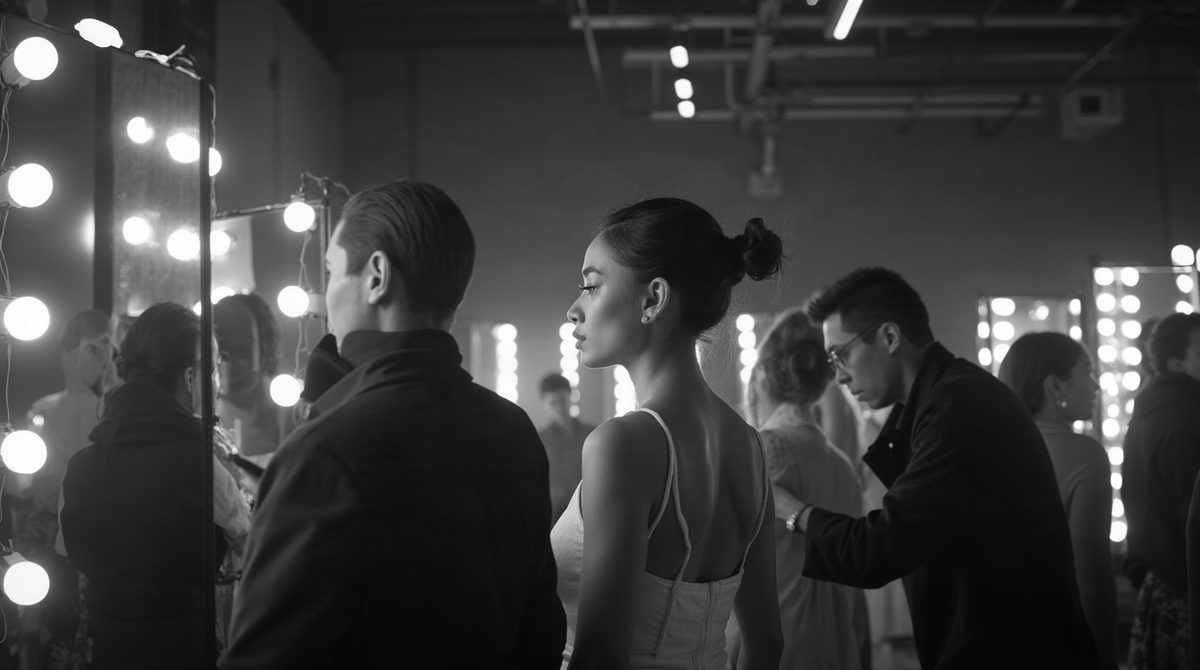
Regardless of the show's scale, a large team is always involved. As a model, you must develop team spirit and sometimes set aside personal interests. When fifteen models meet five makeup artists, designers, assistants, choreographers, TV teams, and many more, efficient work is crucial for your career. After all, designers and agencies are in constant contact. Not only are further bookings by the designer dependent on this, but your agency also carefully observes how you perform live at every job. You, as a model, have a lot at stake, and a fashion show's success can stand or fall with your performance.
Typically, each fashion show focuses on several key points in the organization for agencies.
Needed list.
All planning details for the fashion show. This includes marketing strategies, advertisements, public relations, invitation card designs, background screens for the show, as well as personnel, decorations, and much more. All this is collected in bullet points in the needed list.
Choreography.
Choreography brings a fashion show to life. Therefore, the choreography planning includes a detailed description of each image seen in the fashion show. Models and the show's music are guided by this.
Public relations.
Public relations are important because they happen not only before the fashion show, like advertising. PR includes impressions that visitors have during the show. But PR also covers all press and media communication. It's crucial for designers to ensure that the right media, magazines, and editors are well-informed, guaranteeing coverage before, during, and after the show.
Model casting.
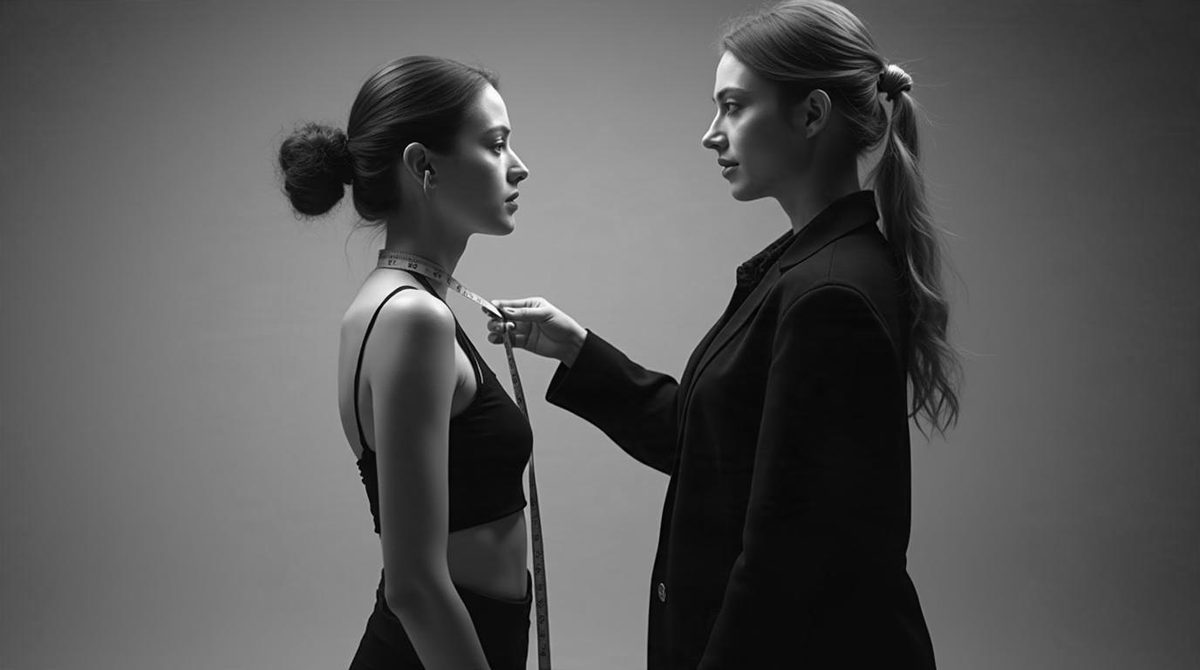
Only now do models come into play. During the casting, designers search for the perfect models and measurements to present the new collection. Not only does the casting need to be coordinated, but booking confirmations from agencies must also be obtained, and backup models need to be planned in case a model drops out. Additional planning includes fittings and the rehearsal, or final rehearsal for larger shows.
Rehearsal.
The final dress rehearsal for all models in the fashion show. Everything needs to be perfectly executed, from the invitations to ensuring that all models and team members know the procedures. Then, the big moment arrives.
Fashion show.
Flashlights, celebrities, buyers now, the grand show begins.
Press work.
After the show, it's before the next show. This is where public relations come into play again. Right after the show, designers' PR agencies send the first photos of the show and information to important magazines and media. This is how each fashion show unfolds in its essentials. Some are more elaborate, while others are less so. No matter what, it's all about fashion.
Fashion consists of two parts: high fashion and everyday fashion, or prêt-à-porter and haute couture. These two styles shape the catwalks. The naming may differ depending on the choreographer. Hybrids of both are always possible. So what does that mean? What are the differences? How do these styles influence the model's walk and the show?