
Model Height and Measurements: What Clients Look For
Episode 1.4 · Size | Proportions | Model Types · 2023-07-18 · 11:53 · Chapter 1 · by Stephan M. Czaja
Quick answer
Height largely decides a classic modeling career. Women under 175 cm have very few chances at castings for major designers, and women over 181 cm also struggle long term. Shorter models can still find work with online shops, labels and advertising in the domestic market, with the right book and agency.
What you’ll learn
- In Germany, clients rate model height highest, ahead of clothing size and appearance, when sending inquiries.
- Women under 175 cm have very few chances with major designers, but can work for online shops and labels.
- Fashion collections are often made in one sample size, which makes very tall models difficult to book.
- International fashion work is stricter: 87-58-82 can be enough for new faces instead of 90-60-90.
- Male models need a good physique and symmetrical face, but a friendly smile matters more than a six-pack.
Read the full episode transcript
Size proportions.
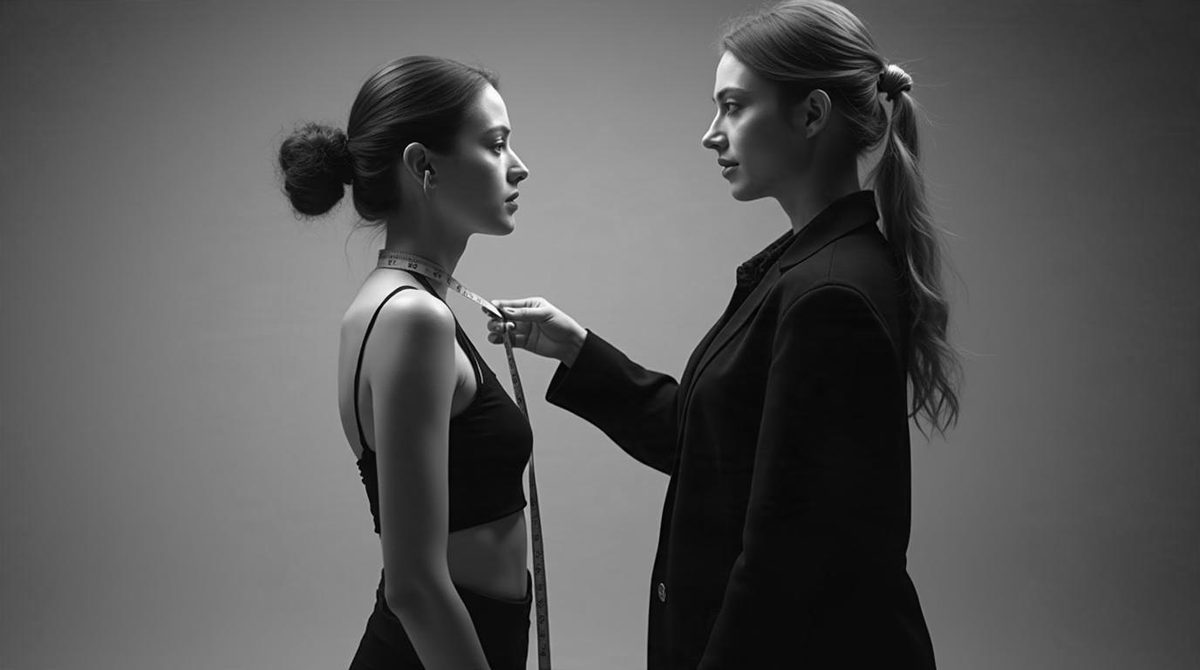
Perfect proportions, optimal height, and a slim figure make the difference. The classic model career that every aspiring model dreams of initially depends largely on your height. There are only a few exceptions, perhaps one in a thousand models who succeed due to their unique style or extraordinary appearance. The rest, nine hundred and ninety-nine, are left behind. For international clients, the body and clothing size of the models are particularly important.
Everyone knows supermodel Kate Moss. She embodies everything: a unique appearance, charisma. Additionally, she leads a very interesting private life, which adds to the story. Every modeling agency is thrilled to have such a gem. However, for most models, the rule remains. Your modeling career is typically determined solely based on your height.
By using the typical criteria of clients, you can see how much measurements matter in jobs. What does a typical client in Germany value when they send an inquiry? Model's height, eighty. Model's clothing size, seventy. Model's appearance, hair length, hair color, skin tone, et cetera, sixty-five. Recognizability, ten.
Later, I will give you an insight into the behind-the-scenes of a modeling agency. From model scouting to booking, we will look at client inquiries and the internal competition faced by new faces. As you can see, the influence of measurements on the decision is significant. However, these measurements are not arbitrarily set. They correspond to a general societal average. Therefore, there are minimum and maximum limits, such as for height. Women must also always be about ten centimeters shorter than men. As a result, the optimal height for men is determined. Clothing size is then determined based on elegance. Let's take a look at the impact of elegance.
Elegance.
In order to present products elegantly, the model's figure is crucial for fashion designers and their agencies. Clothing simply looks more elegant on slim bodies. The model's proportions must be right to create a cohesive overall image during presentations, whether it's a fashion show, billboard, or commercial.
We are all familiar with the famous ideal measurements of ninety, sixty, ninety. Hips, waist, bust. These three measurements are considered the ideal image when in proportion to height. However, as a high fashion model in Milan or Paris, even that is often too much. As a new face, your hips and bust can be narrower. An eighty-seven, fifty-eight, eighty-two has a good chance at castings in the fashion metropolises from New York to Shanghai. I will cover the specific challenges for male models in the advertising industry shortly. But first, let's focus on the ideal measurements for women.
Modeling under one hundred and seventy-five centimeters.
If you are a female model shorter than one hundred and seventy-five centimeters, you will have very, very few chances in castings for major designers, with only a few exceptions. Since you want to make a living from modeling, you need many bookings, not just exceptions. However, as described earlier, there are still opportunities for online shops, labels, and advertising shoots in the domestic market with the right book and the right agency. Therefore, it's worth paying strict attention to fitness, nutrition, and your own proportions, even as a shorter model.
For example, if a product is presented by only one model, height is no longer crucial as there are no visible height differences if the proportions are right, meaning that if you have slightly less than ninety, sixty, ninety at less than one hundred and seventy-five centimeters, the overall image will be harmonious. However, PR and advertising agencies know that smaller models are generally less booked, so the fees are lower. The closer you fit the tall and attractive model stereotype, the easier it is for you.
You can also work as a curvy model. The measurements for curvy models are not as strictly defined as for slim models. Curvy means curvy, which means you must genuinely have curves. Models who are not slim but also not truly curvy are called in between. Curvy models are increasingly in demand and now make up to ten percent of models in agencies. However, it is slightly more challenging for you in terms of measurements because you can both lose and gain weight. Therefore, you must consciously manage your nutrition to maintain your weight and look.
Modeling above one hundred and eighty-one centimeters.
Just as there are limitations for height below, there are also limitations for height above. Female models over one hundred and eighty-one centimeters also face difficulties in achieving long-term success. On one hand, you are taller than your female colleagues, and on the other hand, you are often taller than your male colleagues. With high heels, you are almost as tall as most guys at one hundred and eighty-seven centimeters, even on the runway.
Fashion collections are typically produced in only one size for the initial presentations at fashion weeks, usually size thirty-four, maximum thirty-four, thirty-six for heights of one hundred and seventy-six to one hundred and eighty centimeters. Designers, teams and producers would have to alter every single piece if a model deviates from the norm or they would have to book all taller models to maintain a consistent overall image. These are just two factors that describe why it becomes difficult to model successfully beyond a certain height.
Slim models.
In the international fashion industry, as mentioned earlier, the rules are much stricter. Instead of ninety, sixty, ninety, it can indeed be eighty-seven, fifty-eight, eighty-two for heights of one hundred seventy-six to one hundred eighty centimeters. Fashion designers, just like agencies, aim to present their products as high quality as possible. Fashion needs to be elegantly presented. Even more affordable labels try to match the level of high-end labels in advertising. Whether it's an exclusive international label or a fashion startup, the model must have a slim body for the clothes to drape optimally, with no wrinkles and a perfect fit.
The more high quality and exclusive the product appears to consumers in commercials or billboards, the easier it is for the manufacturer to justify a high price for the product or service. This is also good for you because, as a good model who can sell products through looks and poses, you can also earn a lot of money. Even for new faces, single advertising campaigns can quickly bring in four to five-figure amounts, not for a week, but for a day. Additionally, there are buyouts, which are usage rights for the publication of photos.
Male models.
How does a model stand out in a crowd? Clearly, through a unique look and character. Because what do consumers look for when making a purchase decision? They look for that certain something, just like casting directors and advertising agencies deciding on casting choices. Having a good physique and a symmetrical face are prerequisites for a highly booked male model looking to establish themselves in the modeling business. Initially, your look should ideally be youthful and slim, and later more masculine and athletic. As a male model, you should try to maintain your youthful appearance a bit longer.
However, to truly succeed and secure many jobs as a male model, you must also make a positive impression, whether it's in your agency, during photoshoots, or at castings with clients. This can take various forms, such as the sparkle in your eyes, distinctive, unique facial features, or even a slight gap in your teeth that makes your smile special. Emotions play a significant role in a photoshoot or commercial shoot. Only if you, as a model, can display emotions, can you convey the desired feelings to the customer in the image or video. It's not just the immediate impression, but also the indirect one that distinguishes a successful male model. Later, I will show you an example of how you, as a male model, can influence your image with a sports car.
Designers are particularly concerned with having their collections presented by models who give consumers an additional feeling. Yes, lifestyle sells, as many models are real idols to consumers. Male models have time to do a lot of sports. They travel a lot and maintain a healthy diet. With increasing fame, selling a lifestyle becomes more and more important if you want to work for expensive brands and international clients. This shows how important it is for a model to develop their own unique individuality. Uniqueness pays off over the course of a career.
However, you can still train many things as a male model: walking styles, posing, and much more. There are specific peculiarities for each aspect. For example, your walking style differs greatly from that of female models. While they are usually sexy and move their hips, you will need to have a stiffer and cooler walk. This is just one of many differences. A likable presence is crucial in the modeling industry. A friendly smile is more important for male models than a six-pack.
We have covered all the basics and made an initial assessment of the skills you need as a model. Now let's go a step further and examine the specific requirements that agencies and clients value.