
Types of Modeling Jobs: Photo, Runway and Advertising
Episode 7.1 · Modeljobs | Types | Identification · 2023-07-19 · 13:11 · Chapter 7 · by Stephan M. Czaja
Quick answer
Not all models are the same. Photo models, runway models, beauty, hand and foot models, and advertising models each need different qualifications. Runway work requires perfect measurements, while photo and advertising jobs are more flexible and often focus on a beautiful face, a likable presence and acting skills.
What you’ll learn
- An availability request is non-binding, while an option is a binding commitment to the agency and client.
- Runway models need perfect measurements, while photo models have more flexibility with height and proportions.
- Advertising models need a natural look, a likable presence and a radiant smile; even smaller models have a chance.
- The model must fit and identify with the product and the client, for example healthy hair for hair advertising.
- Advertising models are paid significantly more than runway models, and a justified daily rate should cover possible lost competing jobs.
Read the full episode transcript
Model jobs.
You're already familiar with all the mental abilities of a model and the agencies. We've also thoroughly reviewed your model portfolio and test shoot. You also have knowledge about castings. Now let's slowly delve into the world of work. If you find a good agency for yourself, you will gradually grow from small jobs for social media, online shops, to first look books and initial advertising campaigns and commercials. Describing all the possible jobs for models would be difficult within the scope of a book, but we can certainly take a look at the most important areas for models to give you an overview of the various sectors in modeling and the individual challenges that each job brings.
Not all models are the same. Many people outside the modeling scene don't know that. There's a simple reason for that. Different areas like fashion shows, e-commerce, and advertising require different qualifications. As a beauty and hair model, you need clear skin, well-groomed hair, and sometimes there are jobs as a hand model, foot model for jewelry or shoe brands. Sometimes a model may be incredible in front of the camera, but doesn't have perfect hands or feet, perhaps because they used to do ballet. Each model is unique.
Coordination and body awareness are essential for the runway, but also for close-up shots in commercials. Sometimes a bit of acting is required for emotional moments like friendship, fun, or a loving gaze. While a runway model should be particularly tall and slim, it is important in the commercial sector to have a beautiful face and a likable presence, as well as special talents and acting skills. Therefore, not all models are the same. Before we start with the jobs, here's a brief explanation of one of the most important terms in modeling: option.
Option.
When working as a freelance model, you need to plan your schedule carefully. That's why you give options. Prior to an option, there is often an availability request. This is an initial non-binding inquiry from your agency to know if you are available on a specific date. Many details, such as exact fees, buyouts, et cetera, are usually not determined at this stage, so you don't need to hold the date yet.
On the other hand, an option is a binding inquiry. If there is a specific request or a confirmed offer, your agency will ask for an option. The one who gives the option is in the final selection. The selection then goes to the client, who makes their decision based on the chosen options. When you give an option, it is a binding commitment. From that moment on, the agency, the client, and the project production count on you. The option is only released when we, as the agency, confirm or release it.
After the first option, you can give further options for new inquiries. This means second, third option. Then the booker and the client are aware that you may already have another job. Options and availabilities, non-binding inquiries, will accompany you as a model on a daily basis. You give options for the upcoming month and the next few weeks. You need to coordinate all the options with travel days and your personal appointments. Of course, you also need to fit in appointments with friends and family, as well as holidays and birthdays. Because you cannot cancel a major production under any circumstances. As a new face in one of the top agencies, you cannot afford an unjustified cancellation. Otherwise, you would miss out on exciting jobs and the chance to travel.
From your option to the job, your daily business.
Photo model.
Photos are your daily business. Photos are present in every type of media, whether it's in printed image brochures, social media, websites, online shops, poster campaigns, or even integrated into commercials, as well as in social networks, flyers, and magazines. Photo models are generally individuals who visually advertise products or services by utilizing their bodies. This can be on television, posters, face-to-face, in magazines, online, and everywhere else.
While the body serves as the canvas in modeling, gestures, facial expressions, intense gazes into the camera, posing, and your presence also play an important role for a photo model. Emotions are crucial in advertising because attention is captured through emotions. A model must train hard to authentically convey different emotions on demand. To maintain an optimal model figure, regular exercise and strict attention to nutrition are necessary.
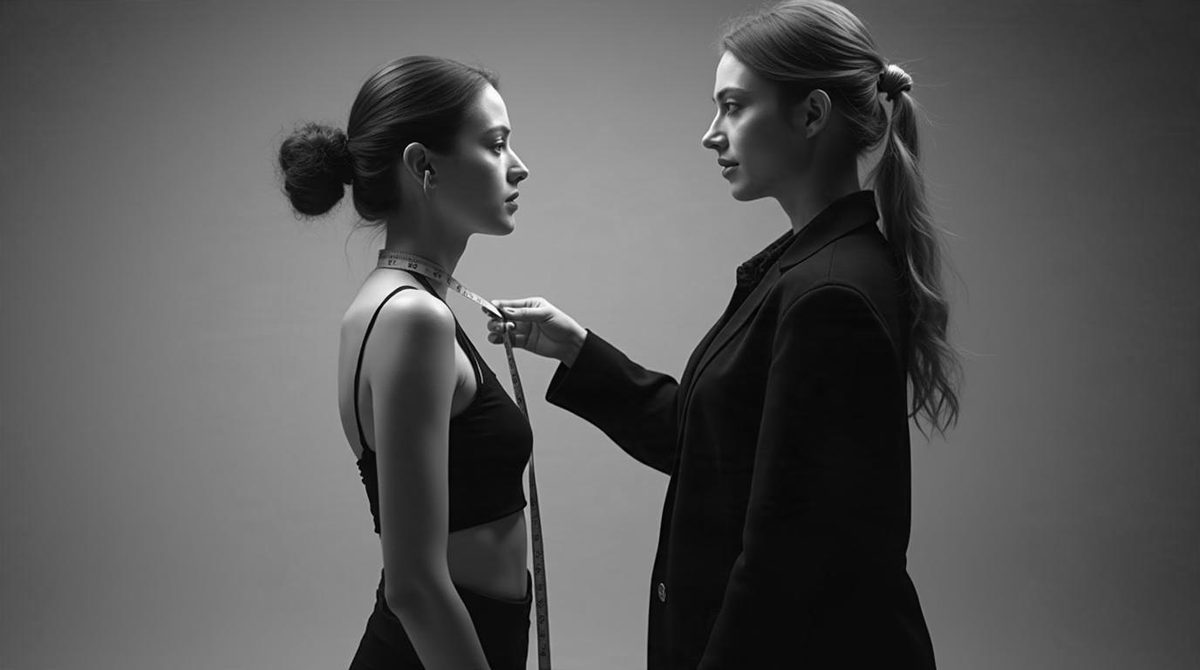
However, it's important to note that photo models and runway models are not the same. In the past, there was even a strict differentiation between the terms photo model and runway model, also called mannequins. Today, although both fall under the general term model in everyday life, they represent two different worlds in terms of work. You can only make it onto the runway with perfect measurements. Photo models have more flexibility. If you have perfect measurements, you can combine both worlds. This way, a model can work for advertising shoots in front of the camera and also make a good impression on the runway for designers.
Of course, there are different types of models, which means that if a model has a great figure, a beautiful face, and a unique presence, but is generally too short for the runway, they can still work as a photo model. If you also work as a runway model, you will encounter additional aspects of modeling such as choreography for catwalk appearances to showcase fashion collections. As a model, you need to know different runway styles and present fashion live on the runway in sync with the music. This is usually not required for a pure photo model. You will learn more about runway styles, fashion, prêt-à-porter, and haute couture later on, starting from page two hundred fifteen. The photos are always created for new advertising campaigns and initiatives.
Advertising model.
A career goal for many aspiring models is to eventually see themselves in a commercial or advertising clips on major streaming platforms, TV, or online. However, poster or print advertising is also part of the job for an advertising model. This provides valuable experiences for your future. Your market value increases, as well as your self-confidence. Not only are the earnings significantly higher for advertising models compared to runway models, but the recognition of a model can also skyrocket through a successful company or brand's advertising campaign.
If your face represents a brand for a season, many new people will quickly start following you on social media. If you manage to work for one of the major brands, you may soon be seen in all their stores, perhaps even throughout Europe. And honestly, who wouldn't like to see their smiling face on a giant billboard? Or to be associated with an exclusive company or brand in general? But what does the term advertising model actually mean?
Commercial models are generally not found in high fashion magazines, on runway shows, or in designers' lookbooks, but rather on billboards, advertisements, commercials, and promotional clips. Commercial models, or advertising models, have a beautiful face according to societal norms, a natural look, and a good figure, but not excessively thin. Height is not necessarily irrelevant for an advertising model, but in the advertising industry, even smaller models, for example, with a height of five-seven or one hundred seventy centimeters, have a chance. What may be unthinkable on the catwalk can be the right type for advertising. The girl or boy next door with a likable presence? Perfect. A radiant smile? A must. The client should be able to identify with the models.
Identification with the product.
When it comes to jobs, there are always two hurdles. The model must perfectly fit the product for authentic advertising and be able to identify with it. For example, an advertising campaign for a cosmetics chain would not consider a photo model with blemished skin and an asymmetrical face. In the case of hair advertising, there's a basic rule: the model must not have damaged hair. Therefore, the specific type of model naturally depends on the products and services being promoted.
It's not just about the products. The client and the model must also harmonize. The model contributes to shaping the company's image or should underline the predetermined image of a company. For this reason, the model must be able to identify with the client, and vice versa.
The profession of an advertising model is particularly popular because the job compensation is significantly higher than that of runway models. For an advertising model, it's essential to be represented by a modeling agency that sets a high, justified daily rate from the beginning, since future jobs of this kind may be lost within the same product groups. After all, the model should authentically represent the product being promoted. The recognition value of a model and a brand is crucial, which is why the faces of major brands are rarely booked for competing brands. Therefore, your daily rate should include compensation for any potential loss that may arise.
Advertising in national markets.
Washing machines, laundry racks, and detergents. Advertising encompasses much more than just fashion and new smartphones. Household products, insurance, and supermarkets. Advertising is produced for national markets that are closer to the end consumer and less focused on values like lifestyle and international jet set. Here, the aim of advertising agencies is rarely to evoke an international lifestyle feeling in the consumer. Instead, they often focus on creating a sense of familiarity.
Rather than featuring high-class parties, national advertising shows families driving their new car into the garage, where they effortlessly make a fresh pizza at home in the oven. The family gathers at the table. Everyone is laughing. In the next commercial, friends are seen enjoying a relaxed barbecue by the lake while drinking a cool beverage. Afterwards, a father celebrates a budget-friendly car insurance with his daughter.
In advertising, you, as a model, have countless areas where you can work. Just take a look at your phone. All the shops, websites, and companies book models or purchase visual materials. When you look back at advertising billboards, it's not just fashion companies. Banks, insurance companies, car manufacturers, telecommunications companies, all of them advertise. This offers opportunities for models with acting skills.