Berlin Fashion Week for Models: Preparation and Castings
Episode 12.2 · Berlin Fashion Week | Preparations | Castings · 2023-07-21 · 15:58 · Chapter 12 · by Stephan M. Czaja

Quick answer
Berlin Fashion Week takes place in January and July. Agencies start about eight weeks ahead with show packages and casting schedules. Models then spend about four days at short castings, followed by fittings, call times and the shows. Trade fairs run alongside and book models earlier.
What you’ll learn
- Berlin Fashion Week takes place twice a year, in January and July.
- Agencies start work on show packages and casting schedules about eight weeks before Fashion Week.
- Models should attend castings only with an invitation and an appointment from the agency.
- Castings are short, from thirty seconds to ten minutes, and juries of three or four people judge only external criteria.
- Fittings take about thirty minutes, and call time starts work on show day a few hours before the show.
Read the full episode transcript
Berlin Fashion Week.
The Berlin Fashion Week may not be part of the big four of the fashion scene, but it is a metropolis with a well-known and highly attended Fashion Week. The Fashion Week in Berlin takes place in January and July. The runway showcase collections from established designers like Wolfgang Joop, Michael Michalsky, and Hugo Boss, as well as talented young designers and newcomers. The sponsorship of Berlin Fashion Week is by Mercedes-Benz. The fashion shows in Berlin are considered a launching pad for international success for young designers and are a colorful, fascinating spectacle in every season.
Fashion enthusiasts from all over Germany pilgrimage to Berlin seasonally, witnessing the fashion shows, discovering new designers, learning about new trends, and celebrating in style. Twice a year, the fashion industry gathers in the capital for Berlin Fashion Week. While for visitors and media, it's all about the shows, buyers and managers from different stores and fashion houses come together at the fashion fairs in Berlin. These fairs run parallel to the various fashion shows.
The events primarily focus on two points in the city: the runway, which is held in changing large locations like the Kaufhaus Jandorf, the Brandenburger Tor, and occasionally the Erika-Hesse-Stadion. The stage is usually located in Me Collectors Room, Berlin-Mitte, and all venues are conveniently reachable for guests by shuttle buses. From Monday to Saturday, it's all about fashion. Over ten shows each day, various side events, and after-show parties. But everything begins for models and agencies with good planning.
Here's an overview. One, model runway training and printing of sedcards. Preparation is key. Two, order and trade shows the heart of Fashion Week. Three, arrival and initial castings in Berlin-Mitte. Four, casting selection by designers. Five, fittings for the major fashion shows on the runway. Six, shows and events at Fashion Week.
Preparations.
Preparations, emails, and networking for us as model managers. Fashion Week starts weeks before the first castings. About eight weeks before Fashion Week, we begin working on show packages and scheduling castings. Besides the notebook, the smartphone becomes a constant companion. As a model manager, one has the task of coordinating all models and appointments. The castings for Fashion Week only take place over three to four days.
Many models attend Berlin Fashion Week, some with little or no experience. Organization and precise briefings for the models are essential. Once all models are confirmed for the duration of Berlin Fashion Week, show packages are designed. The package provides designers or project managers with a quick overview. Since multiple agencies send packages, prominent model agencies put extra effort into getting coveted invitations. Some agencies even create custom sedcards. Why? Fashion Week represents the who's who of the fashion world. Those who can afford it are present. Therefore, it's essential to start working early enough. The better the planning in advance, the smoother the castings, fittings, and shows of the fashion designers will run.
For you as a model, it's essential to prepare yourself well for the days ahead. Get plenty of sleep, eat healthy and balanced meals. The next few days will be filled with appointments, smiling, fittings, and choreography. While the agency focuses on travel plans, accommodations, and appointment organization, castings invitations start arriving one by one. The agency's invitations are critical, and many models try to secure appointments beforehand. However, it's not a good idea for models to show up at castings without an invitation and appointment. If you have a few invitations, it's entirely legitimate to attend other castings, especially if you have a friend or acquaintance there.
As mentioned above, approximately fifty individual shows take place during Berlin Fashion Week. That means there are almost as many model castings in the city before the actual shows. This is a real challenge that requires a lot of teamwork. As soon as the team arrives, the rented apartment becomes the office. Notebooks, smartphones, casting lists, everything is right there at Potsdamer Platz.
Casting begins four to five days before the shows. Most castings take place in Berlin-Mitte and Prenzlauer Berg. The majority focuses on the hotels around Breitscheidplatz, right next to the Gedächtniskirche and Bikini Berlin, which is also a hotspot for all visitors during Fashion Week. From now on, you have four days. If you've been to a casting before, you know that many models show up. Often, there are hundreds from all over Germany and even Europe present to secure bookings for the shows.
For four days, you'll see small groups of models with their portfolios all over Berlin on their way to the next casting. Whether it's a boutique, hotel, or showroom, queues start forming outside the rooms right after the casting starts. From now on, it's waiting until you're called before the designers or juries. If you know the hotels in Berlin-Mitte, Fashion Week is always a special sight. While the large lobbies are usually empty, hundreds of models gather with only small suitcases, portfolios, and eager looks. Welcome to Berlin Fashion Week.
Order Fairs.
During fashion weeks, there are not only the major fashion shows, but also events for buyers from large fashion chains and boutiques across Germany. As a visitor to the fashion shows, you often don't get to see the huge trade fairs. However, Berlin has countless trade shows, each catering to its own style. From premium brands to young trend brands and functional clothing, models are also booked here to present clothing to customers, similar to a showroom. All trade fairs are only for industry professionals, and the job is relatively well-paid as you represent the brand as a model.
The trade fairs are just like the shows, for invited trade visitors only, which is why there is enough space to concentrate on the various looks, cuts, and colors in peace. Not only fashion, but also accessories and jewelry are showcased. The trade fairs are spread throughout Berlin, and hundreds of stands present new fashion pieces for stores. Buyers can see and order the latest samples directly here.
Models are booked for the trade fairs long before the first castings. The bookings for the fairs come in at the agencies one or two months in advance. The models are also confirmed as early as possible so that the brands can secure the best models for their presentations. Models usually work directly on all show days. The job is very pleasant as you get to know the team, creating a friendly atmosphere. By the second day, everyone knows each other, and you can start the day in a relaxed manner. On the shows and castings, however, it's a different story. For days of appointments, hustle, and hope for one or more bookings from fashion designers.
Arrival and initial castings.
Many models check into hotels around the city center. This makes it easier to reach the castings, and there is also some time in the evening to have a drink with friends or new acquaintances. For four days, models and model agents rush through the city center. Everyone is looking for the best jobs and the biggest shows. In their bags are only the most important things, and the smartphone is always within reach. From morning till evening, it's going from one casting to another.
While there's a lot of walking during the day, the evening is crucial for planning the next day. Which casting should be visited first, and which one last? Where can one find good and quick meals? At the same time, you engage in small talk with other models, trying to secure additional castings. For four days, everything revolves around being seen and seeing. The real model life.
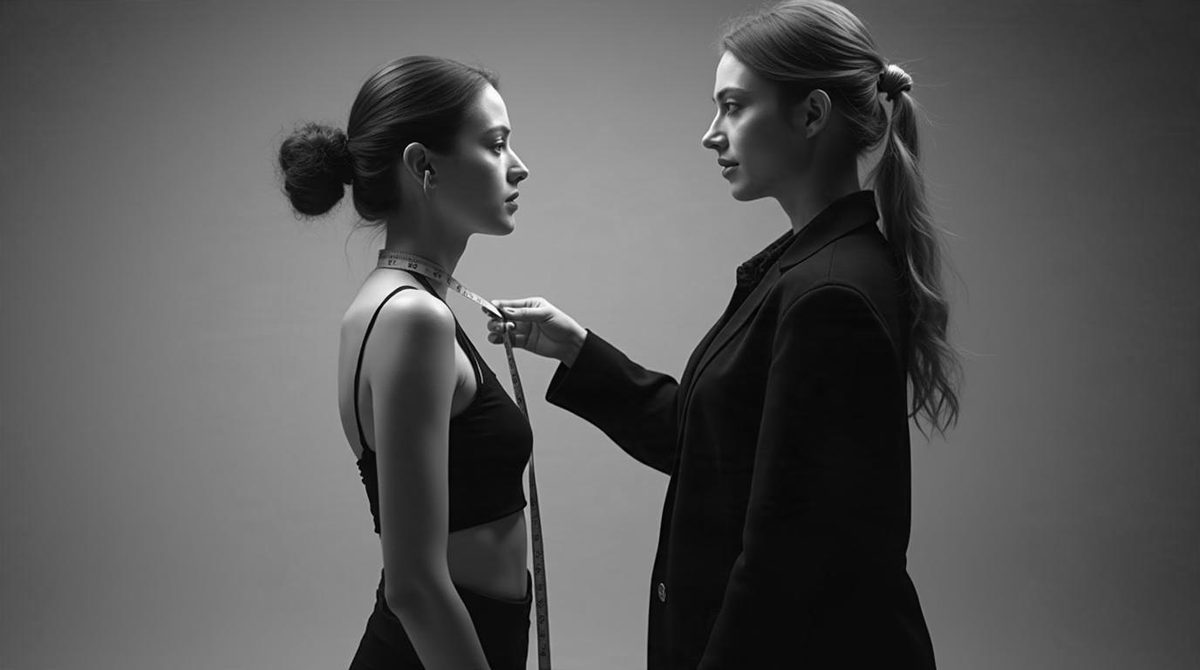
Those who know castings from TV shows might be surprised now. There's no big stage, no spotlights, and rarely any cameras. As a model, you hardly have time, not more than ten minutes, sometimes just thirty seconds. If you spontaneously convince the jury, you might get measured or sent directly to a quick fitting. The jury consists of three or four people who have to evaluate hundreds of individuals based solely on external criteria within a few hours. This often makes castings impersonal, but it's purely due to time constraints.
Castings are held in small boutiques, sometimes in rented apartments, or usually in impersonal meeting rooms of hotels. In the waiting rooms, small groups of models form, all waiting for their turn in front of the designers or juries. Many models see here, for the first time, the size and strength of the competition in their own and other model agencies. Those who impress often receive a call from their model agent on the same evening with the confirmation. Especially outstanding models may also be quickly booked to ensure their availability for the brand's own fashion show. This way, the best models have their moments of success early, even if they didn't have a direct booking for Fashion Week. Pure motivation for the next day.
The time during casting requires models to be highly committed, organized, and resilient. Even after the sixth presentation in one day, you must be able to smile and enjoy the job even after six rejections. With this know-how, you can learn a lot for jobs as a model and strengthen your self-confidence and self-awareness. The short but very intense situation with hundreds of other models quickly gives you a realistic picture and motivates you to do even more for your career.
Casting decisions.
As described, many designers make their decisions on the same day. Speed is crucial during fashion weeks because each fashion show also requires fittings and call time. If you're scheduled to walk in five or six shows, things can quickly get complicated. During fittings, models try on clothing, which usually happens very quickly and takes only about thirty minutes. However, you need to factor in the travel time to the location and possible waiting times.
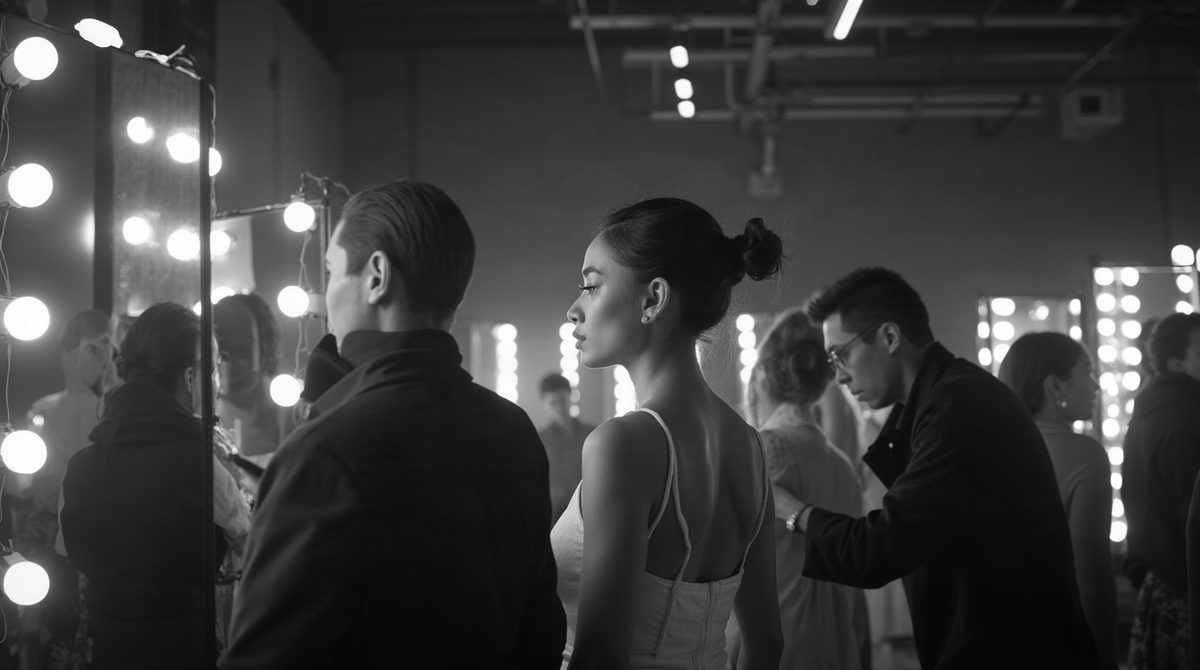
Before each show, there's also the call time, which is the start of work on the show day. At the call time, all models, makeup artists, and stylists gather. All models receive their assigned outfits and styling. Call times often start a few hours before the show to ensure that all models are ready, and the show can start on time. With castings, fittings, and call times for shows, you have a lot of organization ahead of you. Of course, your model agent helps with planning, so you can fully concentrate on yourself.
For model agents and agencies, this is the final phase. There's barely an hour without the need to recharge the phone. While designer assistants call to inquire about models, models request additional fittings and call times, and at the same time, the first confirmations need to be sent out via email. For three days, the phone doesn't stop ringing, and it's not easy to get away from the notebook for a manager. However, the show list fills up, one confirmation after another. Models receive their information immediately, and designers get their booking confirmations.
Even on the last evening, planning continues for the next morning as the final fittings still take place parallel to the first shows. And that's when we come back to quality over quantity. Often, show appointments need to be canceled because there's an option for an even bigger show. For example, one of the grand finale shows that take place at every fashion week worldwide. Here we go, it's Fashion Week.
Shows.
You made it. Two months of planning, a week of travel, casting, and fittings. Now it's your moment, your fifteen seconds on the runway. Hundreds of eyes will be on you, and you'll hear the music as you receive the cue to go. You start your walk backstage, and your heart is pounding so loud you can hear it. The music plays, and there's the audience. Left and right of the runway, all eyes are on you. Smartphones, tablets, everyone is taking photos of you.
You take your first steps. Now comes the adrenaline. You start to smile, and for the first time, you feel the vast world of fashion. Before you know it, you're standing in front of forty, fifty photographers. This is your moment. Enjoy it. Showcase the fashion pieces. Give everyone a perfect shot. Then it's back to the backstage area, quick change of clothes, hairstyle, and style.
Fashion Weeks are fantastic. However, as a model, you will almost exclusively earn your living through advertising campaigns. These are mostly photo shoots, and at the beginning of your career, it's often fashion shoots. Fashion and photography will determine your daily life if you decide to become a model.